Saturday, March 29, 2014

Prompt Response- -E-books


I thought it was interesting to read from the Library Journal article that regarding e-book budgets, 17% will be taken from the Reference budget (2013, 5). This ensures that more reference items will be available via databases. At my local library the use of e-books is growing though they have more technical questions as to how to download items on their particular device. My library uses Overdrive which is to accommodate various types of e-readers (Nook, Kindle, Sony Reader) and tablets. Currently we have more audiobooks being checked out than e-books. Viewing how patrons are accessing e-books they prefer to download these materials on their own (36).

I was most impressed with the e-book categories graph in the article (43). More nonfiction titles need to be included and I liked that foreign language items were highly regarded.  E-books and young adult titles are the trend. The in-demand book genres match what is at my library for both e-books and audiobooks, leading with Bestsellers, Mystery/Suspense, and Romance (45).  After meeting with a cataloger from my local public library she told me that both erotic and religious-based romances in these formats were being checked out regularly. Regarding nonfiction Self-Help, Business, Biographies, Cooking, Weight Loss, and Travel are also popular.

I was surprised by the 65% of those libraries surveyed not wanting to purchase e-book titles from e-book originals or self-published e-books (51). I think this will change in the future; since several young adult and graphic novels come from independent publishers they should be considered as well. I already see e-book collections promoted on my library’s catalog and was impressed by the how word of mouth helps market these items (56). A few patrons from my library access the catalog from their smartphone so they may be checking out e-books independently. Personally I have seen e-books promoted on blogs and not displays. The awareness of e-book availability is a very important factor to libraries (59).

Patron-driven acquisition seems to be another growing trend (82). For me, the take home use of e-readers would depend on the patron’s history (fines, damaged items, etc.). At this time libraries should include both books and e-books. In house circulation statistics are important to have when purchasing these items. Staff training on how to answer technical questions and use the e-book downloading service as well as weeding these items is crucial. It is vital that both small and large libraries can provide e-book lending as a service because the demand is clearly there for all regions surveyed in the article.

What I did not see in this survey was any statistics regarding patrons with disabilities. Although e-books “present great potential for users with print disabilities”, e-book publishers have created e-books and e-readers that are “inaccessible to those with visual, hearing or learning disabilities” (Junus, 2012, 22). From Junus’s research, Amazon’s Kindle allowed the most access to e-text formats (i.e., EPUB, PDF, DOC, Txt, HTML, etc.); the Kindle Fire with App, Barnes and Noble Nook Tablet, and Apple iBook e-readers included DAISY (Digital Accessible Information System) (25).  In this study the Amazon Kindle was most accessible and I was glad to read that users prefer the .PDF format. I wear glasses and prefer articles this way for the white adequate spacing around text, the use of pictures, and zoom in features for PDF files. Patrons with disabilities may need to know how to download Apps as this is becoming the trend and cost-effective.

Resources

Junus, A.G.R. (2012, October). E-books and E-readers for users with print disabilities.Library Technology Reports, 48(7), 22-28.


Library Journal. (2013). Ebook usage in U.S. public libraries [PDF document]. Retrieved from:

Thursday, March 27, 2014

Classic Western Annotation- -Louis L'Amour


Hondo

Hondo


New York: Bantam Books, 1983.

179 pages

ISBN:  0-553-28090-2

Summary: Cool and collected post-Civil War Army dispatch rider Hondo Lane travels through the deserted and rugged terrain of the West (southeast Arizona); his loyal sidekick Sam accompanies him as they face the aftermath of brutal fighting between weary Company C Army soldiers and devoted Apache Indians; Hondo constantly reflects on his earlier unexpected visit with engaging housewife Angie Lowe who is independently raising her only son Johnny; the lone sling shooter is determined to rescue them before the boy is forced to become a member of the Apache tribe.

Genre:  Western/Adventure/Romance

Characteristics: 

The landscape is well detailed and takes place in the Western United States after the Civil War (late 1860s). Protagonist Hondo is trying to right a wrong and uses both mental and physical attributes to defeat any characters who lack morals (Saricks, 2009, 315). The tone is nostalgic yet the direct and quirky dialogue remains clever; Angie Lowe and Hondo Lane’s feelings towards another are in conflict with the long awaited return of her husband, Ed, who is on another gambling run at the calvary unit’s fort. L’Amour is excellent at providing the viewpoint of the supporting characters within chapters who actions weave the story together. This book is also an Adventure because Hondo is viewed as a hero and is well-respected; a map is shown at the beginning to entice readers. Saricks notes that L’Amour’s “adventure-filled Westerns still thrill readers” today and therefore are timeless (322).

Appeals

  • Inspired the movie Hondo featuring actor John Wayne
  • Respect to Apache Native American culture gives the novel historical value
  • Fast, action-paced plot hooks readers

Read-a-Likes:

Novelist:

  • The Abandoned Outlaw by Max Brand
  • Brimstone Trail by Marcus Galloway
  • Riders of the Purple Sage by Zane Grey
  • The First Mountain Men by William W. Johnstone
  • Tucker’s Reckoning by Matthew P. Mayo


References

Saricks, J.G. (2009). The readers’ advisory guide to genre fiction. 2nd ed. Chicago: American Library Association.


Wednesday, March 5, 2014

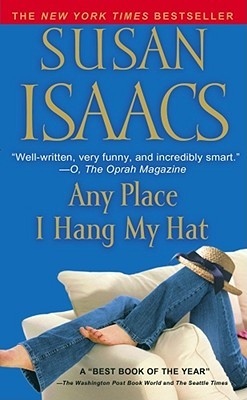
Women's Lives and Relationships Annotiation - - Susan Issacs


Any Place I Hang My Hat


Any Place I Hang My Hat


New York: Scribner, 2004.

382 pages

ISBN: 0-7432-4215-7

Summary:  Local journalist, Amy Lincoln, witnesses a young man ousted from Thom Bowles’ presidential fundraiser because he claimed to be his illegitimate son, she offers help to validate his claim because she too was abandoned at birth; after a painful breakup with her boyfriend, and a search for her mother, Amy is freed from her difficult childhood - - finding closure, she moves ahead.

Characteristics:

Amy’s mid-30s life is in New York, upbeat, and a good start in appreciating the chick lit genre from the Women’s Lives and Relationships category. The engaging conversations with lifelong friend Tatiana include revealing their dreams and humorous girl talk. Relationships abound with Amy’s stoic boss during a challenging election year, the indifferent Bowles, her suitable boyfriend, close friend Tatiana, mighty grandmother, quirky dad, and atypical mother. The pacing is gentle and the dramatic characters have a broad appeal to readers.


Genre: Women's Lives and Relationships

Appeals:

  • Focus on self-worth and identity
  • Career-driven female protagonist
  • Jewish family relationships

Read-a-Likes:

Novelist:

  • Baby, Don’t Go by Stephanie Bond
  • Trust Me on This by Jennifer Crusie
  • A Love of My Own by E. Lynn Harris
  • One Special Moment by Brenda Jackson
  • Once a Wolf by Susan Krinard

Special Topics Paper- -Readers' Advisory Marketing Trends

Readers’ Advisory Marketing Trends in the Public Library
When it comes to marketing trends in public libraries, statistics matter in meeting the needs of patrons. According to a national survey by Library Journal, NoveList, and the RUSA/CODES Readers’ Advisory Research and Trends Committee, four points of service exist. In-person readers’ advisory takes place 85% at the reference desk and 59% at the circulation desk. Regarding self-directed readers’ advisory (RA), 94% of libraries created book displays and 75% offered book lists. Book clubs (89%) and author visits (86%) are being held at most public libraries. Seventy-nine percent of libraries provide read-a-likes or other tips on websites. Less than half of the respondents posted recommendations on social media (Thorton-Verma & Schwartz, 2014, 1).
Saricks states that “displays are the easiest and best marketing tool” in libraries (2010, 43). She recommends that older titles be used since they “tend to be lost in the stacks and need an opportunity to shine again” (43). Since patrons are more visually-oriented, libraries need to include books with jackets which make all the difference. The books selected must be “good titles we have loved ourselves or ones that were well reviewed or popular at the library” (43). Displays are important to recognize if the items truly have appeal with patrons, help expand  the librarians’ knowledge of the collection, gets staff away from the reference desk, and show patrons that librarians care about their reading and audiovisual interests (43).
LibraryAware uses the information off of NoveList to “create flyers, bookmarks, e-mail blasts, and press releases using the library’s own stationary” (Circle, 2012, 30). Since more patrons are bringing their smartphones to the public library, QR codes can be “printed on the signs at the end of shelving units, collected on bookmarks, or placed directly within the covers of highly circulated titles…these are used to point readers to book reviews or a list of related titles” (Hampton, Peach, & Rawlins, 2012, 410). For creating effective booktalks, the strategy is to use “a hook to entice readers with a quick description of a book’s appeal rather than a detailed plot summary” (Saricks, 2012, 29).
Readers’ advisory will still be evident in the future of libraries. Fifty-four percent of respondents say that RA will be more important in the next three years, and 84% say that RA is important to their library’s mission. Half of respondents surveyed plan to expand or digitally add RA services while several want to expand self-directed RA (42%). Also it should include RA programming (41%) and provide one-on-one RA in-house (38%). The readers’ advisory interview is best preferred at the reference desk and then followed by roving librarians (Thorton-Verma & Schwartz, 2014, 1). Going to the stacks dissuades becoming a target for readers (Saricks, 2012, 29). On the Internet the library’s website was rated more popular than social media (Thorton-Verna & Schwartz, 2014, 1).
The biggest problems facing RA are keeping up with books and genres (21%) and discomfort reading unfamiliar genres (17%). Although it is noteworthy that 72% of respondents feel confident in their adult RA work, this is not the same when advising children (58%) and young adults (51%) (2). Another crucial issue facing RA services includes hiring library staff with previous technology  experience over readers’ advisory  background who have expertise in reading and material collections (2). In regards to personal preferences, the library staff surveyed had differing answers. A lack of RA training was deemed very important to librarians; 23% of participants said that their library provided no training or support for RA, 42% had no Readers’ Advisory class in library school, and 62% reported self-directed training (2).
Time is also a critical issue, with librarians stating that 14% found finding the time to train or read was an obstacle. The immediacy of remembering titles on the spot was also an issue because “patrons want immediate answers and quickly lose interest within minutes” (2). Furthermore, RA conversations are no longer only face-to-face; questions now come via the Internet (Saricks, 2012, 29). Online RA forms on library websites are now being used for the following reasons: Readers can fill them out at their own leisure and staff members have time and resources to search out a range of suggestions (Saricks, 2010, 43). 
Patrons now have a higher level of pre-existing knowledge which makes it more difficult for librarians to know upcoming titles, new authors, and online publishers. Centralized collection development also hinders branch librarians since they do not know which titles to get in order to seek out advanced copies or reviews (Thorton-Verma & Schwartz, 2014, 3). The various sources that librarians use for RA assistance include professional journals and newspapers, NoveList, as well as Goodreads, blogs, and even word of mouth.
Librarians are using recommended databases most frequently, followed by print and online professional journals, social networking sites, word of mouth, online booksellers, and the library’s catalog (3). The Readers' Advisory Online Blog offers several links to blogs and LibGuides for reading lists, monthly articles, fun facts, marketing ideas, and new technologies. The "M" Word-Marketing Trends library blog includes grants and scholarships as well as ALA links and creative tips to promote library advocacy and reading. Visually impaired readers who listen to audiobooks will want various types of information that is not always provided on the library catalog (Moyer, 2012, 348). The library staff must acknowledge the appeals of each genre, and use a variety of tools and resources to be confident during the readers’ advisory interview. 
  
References
Circle, A. (1, February 2012). A new player in marketing. Library Journal, 137(2), 30-31.
Hampton, D.; Peach, A.; & Rawlins, B. (2012, October/December). Extending library services with QR codes. Reference Librarian, 53(4), 403-414.
Moyer, J.E. (2012). Audiobooks and e-books. Reference & User Services Quarterly, 51(4), 340-354.
Saricks, J. (2010, September 1). At leisure: Marketing 201. Booklist, 107(1), 43.
Saricks, J. (2012, October 1). Expanding the RA conversation. Booklist, 109(3), 29.
Thorton-Verma, H., & Schwartz, M. (1, February 2014). The state of reader's advisory. Library Journal, 139(2).